
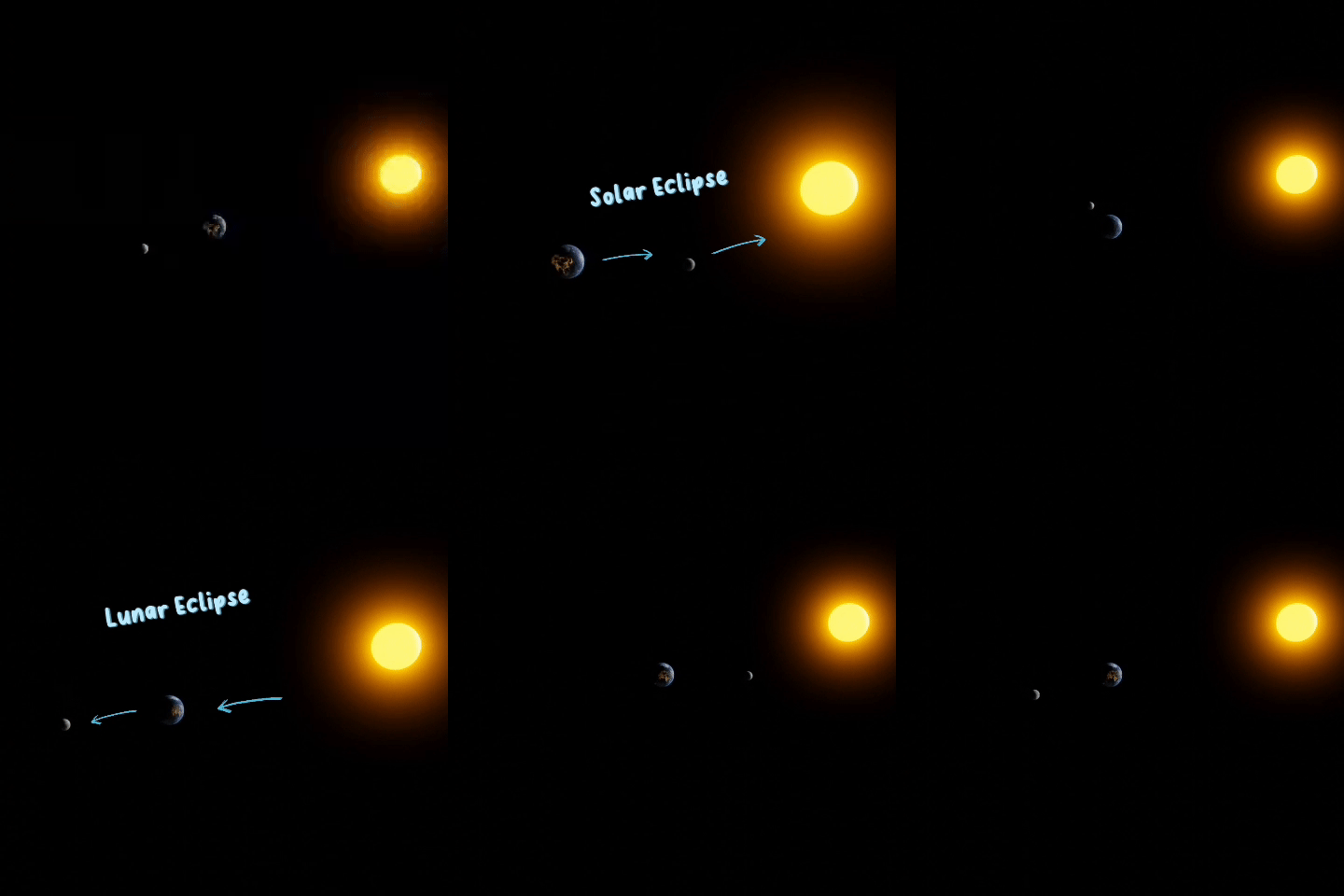
Approximately four to seven times annually, the Earth, Moon, and Sun align in precise formation, giving rise to the impressive celestial event known as an eclipse on a cosmic scale. The Moon's path around Earth exhibits a tilt concerning Earth's orbit around the Sun. This inclination explains why we encounter occasional eclipses instead of having them occur every month. Eclipses come in two varieties: lunar and solar. In a lunar eclipse, the Earth's shadow conceals the Moon, while in a solar eclipse, the Moon obstructs our view of the Sun.

Solar eclipses exclusively occur during the new moon phase when the Moon is positioned between Earth and the Sun. In a solar eclipse, the Moon's shadow is cast upon Earth, obstructing or partially obscuring our sight of the Sun. Although solar eclipses happen with the same frequency as lunar eclipses, they are observed from a significantly smaller portion of Earth each occurrence, making them far less common to witness.
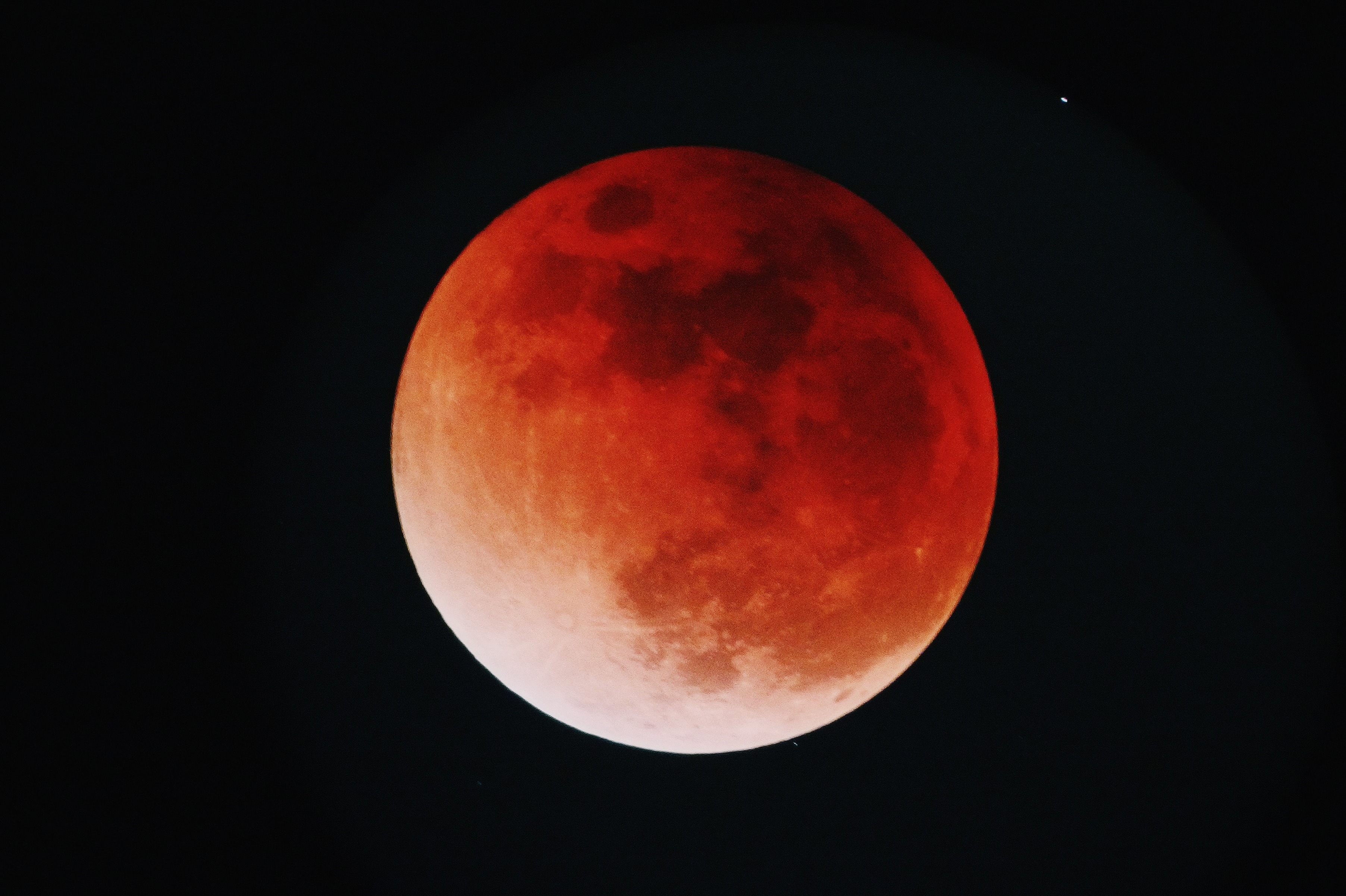
Lunar eclipses take place during the full moon phase. When the Earth is accurately situated between the Moon and the Sun, the Earth's shadow is cast onto the Moon's surface. This shadow dims the Moon's brightness and occasionally gives it a captivating reddish hue during a gradual process spanning several hours. Each lunar eclipse can be observed from approximately half of the Earth's surface.
The occurrence of remarkable solar eclipses on Earth is a fortunate natural phenomenon. Despite the Sun's considerably greater size, with a diameter approximately 400 times that of the Moon, the Moon's proximity to Earth, which is roughly 400 times closer, allows for the nearly perfect alignment that enables the Moon to effectively obscure the Sun.
